
When lines shift, so does power, and right now, Texas lawmakers are looking at making a “power grab” that will shape the future of the state’s political maps.
When lines shift, so does power, and right now, Texas lawmakers are looking at making a “power grab” that will shape the future of the state’s political maps.
On July 9, Gov. Greg Abbott called a special legislative session, which began Monday.
The 18-item agenda covers an array of topics, from flood warning systems in the wake of the devastating Texas Hill Country floods to reproductive rights to more proposed regulations on hemp, following the failure of SB 3.
But, the big ticket item this session is the mid-decade redistricting of congressional seats, putting narrow Democratic districts in the Rio Grande Valley at risk.
On July 15, from the White House lawn, President Donald Trump put pressure on Republicans to redraw congressional districts, looking to add five more GOP-leaning seats.
In an interview with CBS, on the topic of redrawing congressional districts, Trump said, “Texas would be the biggest one, and that would be five.”
FIRST COMMITTEE MEETING
The House Select Committee on Congressional Redistricting held a public hearing Thursday on the redrawing proposal in Austin.
The committee is headed by state Rep. Cody Vasut, R-Angleton, appointed by House Speaker Dustin Burrows, R-Lubbock.
It was stated multiple times that the purpose of the meeting was to hear from the public, whether they’d like to see revisions to the congressional districts, and if so, what kind.
It was discussed that the redrawing was brought to the table by the Department of Justice, which claimed that some districts are in violation of the Voting Rights Act through the creation of “coalition districts.”
The letter penned by the DOJ accused Texas lawmakers of drawing race-based maps back in 2021, to which many committee members denied in the opening few minutes of the meeting.
The letter targets four districts in particular — three in the Houston area and one in the Dallas area. However, not one of these districts was mentioned in the hearing notice, according to committee member John Rosenthal, D-Houston.
It was also noted by multiple members and people testifying that the DOJ filed a lawsuit in December 2021, arguing that Texas’ post-2020 census congressional maps diluted Latino and Black voting power. Fast forward to March, and the DOJ withdrew these claims, but the litigation continues with private plaintiffs.
Thursday’s meeting revealed that no one on the committee has seen an official proposed map. Nor have any of the testifiers, or anyone in the public, for that matter.
Special sessions can last up to 30 days, giving the committee 27 more days to issue for redistricting. If lawmakers are not successful, Abbott has the opportunity to call another special session.
Two more meetings are slated for Saturday, at 11 a.m. in Houston, and Monday at 5 p.m., in Arlington.
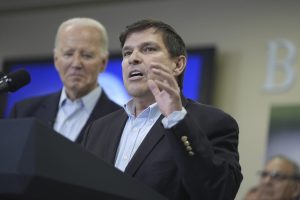
U.S. Rep. Vicente Gonzalez, D-Brownsville, demanded the redistricting committee hold a hearing in the Valley, a sentiment that was echoed by people testifying at Thursday’s meeting, along with popular resentment for the redrawing.
“The governor and his cronies love to use our region as a backdrop for their political theater and invoke their gains with Latino voters in our region, yet they have no interest in listening to the perspectives of the hardworking, honest citizens that make up the Valley,” Gonzalez said in a statement. “Our region is just as important as urban areas in Houston, Dallas, and Austin and we, too, have a stake.
“We deserve to be heard.”
SOUTH TEXAS SAYS ‘NO’
Many Texas representatives are pushing back against these legislative map revisions.

Vice Chair R.D. “Bobby” Guerra, D-McAllen, is fighting against the redistricting from his seat on the House Select Committee on Congressional Redistricting. He called it “an honor.”
“I will be able to fight from the front line for our core constitutional value of one person, one vote. Normally we redistrict after a census, which will not happen until 2030. This mid-term redistricting is unusual at best and suspect at worst,” Guerra said in a statement.
“You can count on me to stand strong to protect each Texans’ right to exercise equal voting power to elect the candidate that they believe best represents their community,” he said.
State Rep. Erin Elizabeth Gámez, D-Brownsville, criticized Abbott, expressing that the legislature should focus on recovery for Texas families affected by the Texas Hill Country floods, and ensuring local emergency response agencies are properly funded.

“But, instead of taking his cues from Texans, the Governor is doing President Trump’s bidding by demanding Texas be gerrymandered in a way that will cut communities in half and dilute our voices for pure political gain,” said Gámez.
“Our constituents deserve congressional districts that look like steaks — solid, cohesive, and reflective of real communities — not string beans that stretch hundreds of miles, dividing the Valley and stringing it together with areas north of San Antonio,” she stated.
“Communities should be kept intact to ensure their voices are heard and unique needs effectively represented,” Gámez added.
Gámez’s criticisms were similar to what state Rep. Sergio Munoz, D-Mission, had to say.
“I think the Legislature should focus on relief efforts in light of the devastating floods and loss of life. Now is not the time for redistricting when we should be securing resources and tools towards everyday Texans who were affected by these disasters,” said Munoz.

“Policies aimed at improving our warning systems and establishing necessary communication technologies should be the focus,” he said.
State Rep. Terry Canales, D-Edinburg, declared his opposition to the Trump administration’s efforts to redraw Texas’s congressional map, calling it “a brazen attempt to dilute Latino and Democratic voting strength in the Rio Grande Valley and across Texas.”
“Republicans are using the cover of vital flooding response and disaster relief legislation to push through this power grab to gain up to five extra Republican seats in Congress,” said Canales.
“If these maps are redrawn, families in South Texas will lose their representation in Washington, D.C., as their votes are diluted to fit gerrymandered districts that are only in the service of protecting one political party and its president’s short-term political goals,” he added.

State Sen. Juan “Chuy” Hinojosa, D-McAllen, penned an op-ed on the subject.
“The Trump administration is leveraging their influence to push for maps that serve their interest in the short term. They are using the DOJ to question minority ‘coalition districts’ when according to the Texas Demographic Center, white residents comprise less than 40% of the Texas population, yet attempts are being made to draw a map that would allow white voters to dictate 28 to 30 of Texas’ 38 congressional seats,” Hinojosa wrote.

“This maneuver not only risks further marginalizing minority voters but will also set the stage for lengthy and costly litigation that will burden Texas taxpayers for years to come.”
Originally published in MyRGV.com: https://myrgv.com/local-news/2025/07/25/valley-lawmakers-rail-against-republican-power-grab-attempt/#google_vignette
Showing 1 reaction